Monday, March 30, 2015

Costumes Galore

In addition to setting, costuming is an essential part of mise-en-scene that could truly make or break the entire vibe of a film.  Today, I discussed with our featured actress Shanna Iglesias what she will be wearing during filming...which is set to occur either Tuesday or Wednesday of this week at NSU.


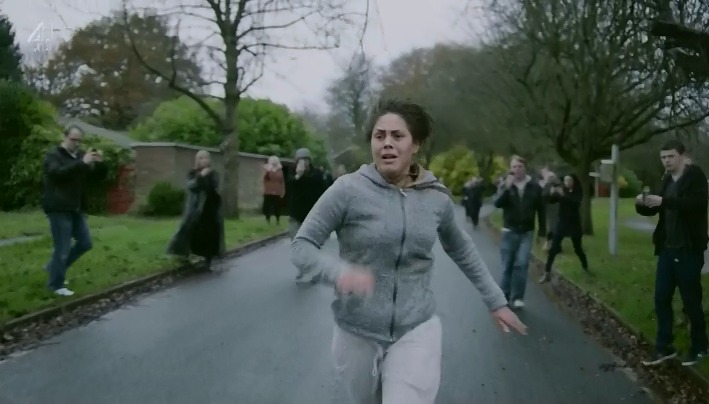
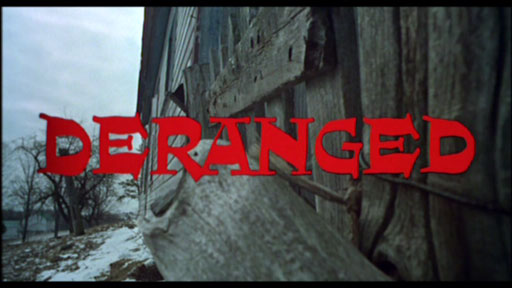
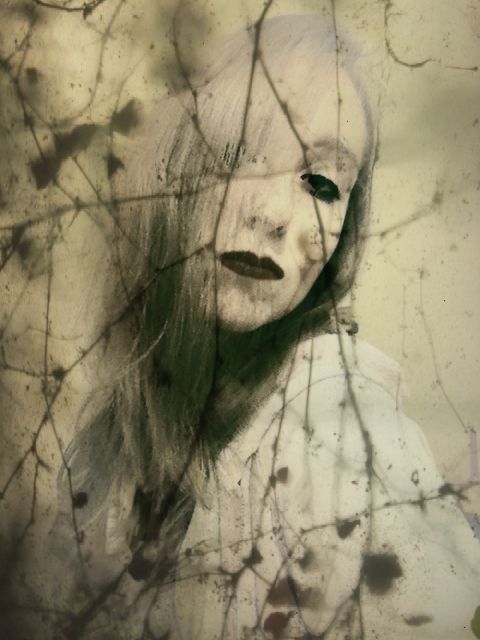
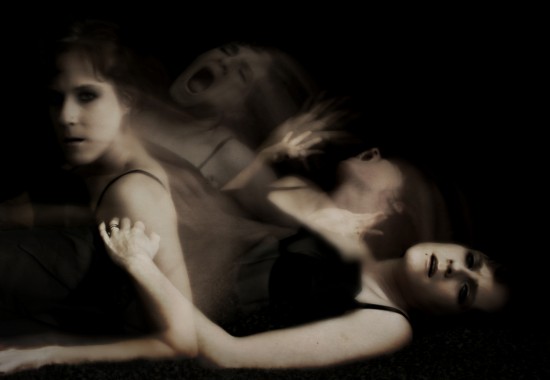
Her attire will be quite simple, yet effective in capturing the look of the criminally insane.  The costume is actually inspired by a character featured in an episode of "Black Mirror", found on Netflix.  Shanna will be wearing raggedy sweat pants, a ripped and somewhat stained t-shirt, and basic sneakers.  Some minor details in the look will be chipped nail polish, dark under eye circles, and teased messed-up bed hair...to the extreme.  Obviously, this costume is as basic as it gets, but De-Ranged Pictures feels that this is a simple but also quite realistic representation of a schizophrenic patient being treated at an asylum-like facility.  We were careful not to make the costuming too blatant, while also not being too subtle, because the entire point of a psychological thriller is suspense and mystery.  Basically, we do not want the audience to be sure that our heroine is actually crazy until the end of our two minute introduction.  Hopefully, the costuming we have picked will lend itself to the audience mentality we are trying to create.  Hopefully, our character Abigail will be a 'happy medium' between these two depictions of female asylum patients shown below...

                                                              
Next stop: Filming.  Stay Tuned! The hard work has yet to begin.

Wednesday, March 25, 2015

Prefilming...Psychological Thriller Basics Take 2

So before we begin filming, there are a couple of basic strategies that really help to create the creepy vibe present in many psychological thriller movies.  These "codes and conventions" employ many key aspects that are important within the Cambridge AICE media studies curriculum regarding film: mise-en-scene, editing, sound, theme, etc.  It really all adds up to creating one unsettling big picture!

So here's a grocery list with some key ingredients persistent in many psychological thriller films, such as 'Black Swan',' Shutter Island' and 'The Machinist', that De-Ranged pictures plans on picking up and using while concocting the opening sequence of "Shattered."

  1. low key lighting and shadows..."used to add tension in a scene, and to represent the inner darkness within the characters...create enigma and mystery...dark and tense atmosphere"
  2. mirrors as a symbol..."Used to portray the use of reflection of a character's inner self, as well as representing 'the dark side' of some characters."
  3. quick cuts, fast paced edits, and variations of camera shots/angles...'Highlight the feelings of suspense and tension, mainly used during important scenes....done to build tension and panic amongst the audience to reflect what is happening on screen."
  4. flashback/dream sequences..."give the audience an insight into the character's past...plays with the target audience's mind and makes them think about the action taking place"
  5. typical/stock characters..."criminals...prison inmates...menaced women...  characters with dark past...psychotic individuals..."
  6.  themes of insanity or state of mind/what is real vs. what is not real..."Often a character's perception of the world is revealed to be different to that of others with a more sound state of mind...The idea of what is real and what is not is commonly used in psychological thrillers...This compels the audience to pay attention and interests them as it forces them into thinking so that when they decipher the story they feel a sense of achievement."
  7. music or lack there of..."mixture of diegetic and non-diegetic sounds...there may even be no music at times...atmospheric sounds and sound effects are used to create an eerie sound and build tension."
  8. coloring in set and costuming (part of mise-en-scene)..."The colours used in psychological thrillers are predominantly red, black and white.  They have connotations of danger, violence, blood, evil, and mystery."

There we have it.  Hopefully, De-Ranged Pictures will prove successful in creating a film that twists the audience's psyche by offering a special look into the fragile mindset of our main character, Abigail, in the original film "Shattered."  With these tips in mind, we hope to do justice to the genre of psychological thriller and create something new that is as entertaining as it is unsettling.  Looks like we have a lot of work ahead of us!


Codes and conventions of a psychological thriller. (2013, February 7). Retrieved March 25, 2015, from http://www.slideshare.net/paigewebbx/codes-and-conventions-of-a-psychological-thriller-16401609

Tuesday, March 24, 2015

De-Ranged

So what's newest on the journey to creating an original psychological thriller opening scene?  Well, for starters, we have come up with the name for our production team: "De-Ranged Pictures."  The reason for this is that, in addition to capturing the creepy essence of our motion picture, the name also serves as a play on words.  De ranged could also be taken in a more literal aspect...such as 'not all over the place.'  Regardless, our production company's name is catchy enough and frankly, quite irrelevant in the grand scheme of this project.

Next, our script is complete along with our casting!  We used an online service called "writer's duet" to create the script and a rough outline of the screenplay.  This service is efficient in the sense that it is really easy to differentiate between dialogue, actions, and shots, which made our job as novice screenwriters a helluva lot simpler.  It might behoove us to attach a copy of the script for the opening scene in "Shattered," but it contains some major spoilers, and running along with the element of suspense that is prevalent in this blog as well as our film, we have yet to disclose this.  *insert evil laugh.*  However, we are glad to announce that Shanna Iglesias will be starring as our film's disturbed protagonist, Abigail, and Josh Prem will be featured as the voice of the nonexistent interviewer.  We are sure that these actors have what it takes to do justice to our script, and truly encapsulate the creepy and unsettling vibes that De-Ranged Pictures is trying to convey through this piece of media.

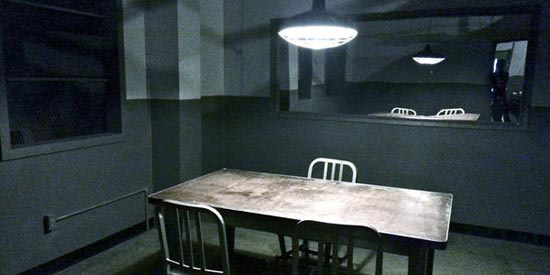
Due to scheduling conflicts, we have yet to film.  However, this is somehow fortuitous because it gives us the opportunity to find the perfect filming location: a secluded office space with a creepy ambiance.  Other than that, the only materials we need to complete the setting are a big desk/table, two chairs, and a dusty mirror to hang on the wall.  All of these set pieces are accounted for, and De-Ranged Pictures plans as of now to film within an office space at Nova Southeastern University's medical school building located in Davie Florida.  This is subject to change, but will most likely wind up being our filming location. Filming is expected to be completed within two sessions: one shooting the focused interview aspect of the opening scene, and the other to shoot three tiny flashback snippets which will give the audience more background information regarding the protagonist's story.

And that's about it for now! Here's a clip from "The Dark Knight" featuring a creepy interrogation between Batman and the Joker.  I included this scene in the blog for two reasons.  1)  It has some elements that pertain to the scene we are about to create, along with fantastic script writing, acting, and mise-en-scene.  2)  It's just downright genius filmmaking by Christopher Nolan...Enjoy! Stay Tuned for more from De-Ranged Pictures Presents, "Shattered."


Friday, March 20, 2015

Suspense: The Anticipation of Action

Suspense is an essential element of 'good film', a key ingredient that many modern scriptwriters fail to include in their works, resorting to a formula that leaves out the element of surprise.  Even so, surprise and suspense are very different terms, and the essence of suspense stems just as much from the production aspect as it does the prewriting one.  So what exactly is suspense?  And furthermore, how does one produce the effects of suspense within film audiences solely through the process of scriptwriting?  "Keeping the audience on the edge of their seat is a function of suspense.  Suspense is not the same as action, nor is it the same as surprise.  Suspense is the anticipation of action.  The longer you draw out the anticipation, the greater the suspense."


The article that this information stems from provides three case studies of films that incorporate elements of suspense in a successful way, primarily through the use of a weapon that heightens audience's anticipation of action.


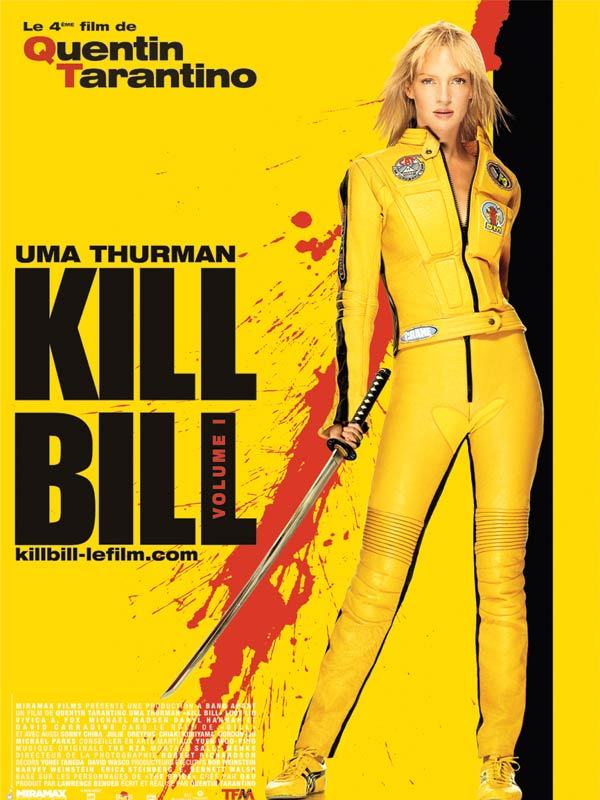
In the movie 'Unfaithful', starring revered actors Richard Gere and Diane Lane, there is a heightened scene of suspense when Gere's character confronts the man pursuing a sexual affair with his wife.  "This is a dramatic situation made volatile and dangerous just by showing us a very sharp butcher's knife sitting on the table near the two men.  A deadly weapon within easy reach."  Of course, the audience expects something fatal to occur involving the knife, yet the screenwriter and director surprise viewers when Gere kills his nemesis instead by smashing a snow-globe on his head: an object usually considered innocent and harmless.  This element of suspense is also achieved within scenes in movies such as "Kill Bill" starring Uma Thurman and "Murder My Sweet," the private eye film.

"Tension in unresolved conflict.  The conflict has to exist below the surface, and it has to threaten to erupt at any minute.  When you throw a gun or a knife into the scene, the tension escalates.  Want to add suspense to your dramatic conversation?  Just add a weapon!"  Well maybe a physical weapon doesn't exactly apply to the scene my production team is creating, but can an emotional and internal weapon such as a cognitive disorder serve as a substitute just as eerie and unsettling?  hmm.

http://www.scriptsecrets.net/tips/tip270.htm
Martell, W. (n.d.). Screenwriting Tip Of The Day by William C. Martell - Suspense. Retrieved March 20, 2015, from http://www.scriptsecrets.net/tips/tip270.htm

Wednesday, March 18, 2015

"Shattered" Storyboard and Premise

Within the past few weeks, my production team has made a couple of developments in the creation of our original film opening.  Most notably, we have come up with the film's title in addition to the beginning of a rough draft story board.  The title of our cinematic piece, "Shattered," refers to the disillusioned world that schizophrenics often find themselves in, with perceptions that are both distorted and broken.  Our heroine, named Abigail, has a frame of mind which is completely disorganized, leading her to perceive a murder that never occurred... causing her entire world to come crashing down on her.  Her view on the world, and herself, mirrors an eery reflection of broken glass- a motif that we intend to show both literally and figuratively in the opening scene.  Also, we plan on somehow incorporating broken shards of mirror glass into the perceived murder that the heroine thinks she has committed, while in reality, she had used this fabricated weapon in an attempt to harm herself.  This plot point is subject to change..but at the moment it's what we've got.  Below is our incomplete story board...please pardon the questionable drawing talent.


Also in the works is the script and screenplay for our original film's opening sequence.  What is the next legitimate step?...finding the perfect location to film!  Follow up on the next blog postings to see what our production team is up to next.  Stay tuned.

Friday, March 13, 2015

Suspense according to Hitchcock

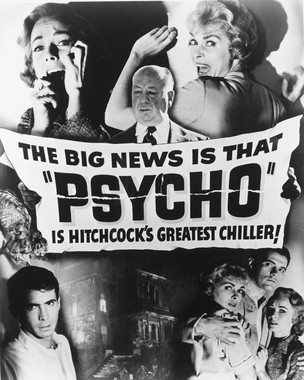
Hitchcock is widely recognized as one of the early masters of thrilling and chilling suspense in film, using techniques that revolutionized the way audiences viewed movies--upping the game in fear without needing to use cheap scares or gore to incite horror in audiences.  Our production team strives to create a psychological thriller just as compelling and awe-inspiring as Hitchcock's masterpieces, inciting just as much tension as it does wonder.  Below are some of Hitchcock's celebrated techniques used in many of his films in order to create that special effect of captivation among his audiences...Keep in mind that these are not even close to providing justice to the vast array of genius that Hitchcock mastered.  If anything, these are the main ones that we plan on using because we find it applicable to our particular piece...


  1. Manipulate the audience mindset.
    • "Hitchcock knew why people are drawn to a darkened theater to absorb themselves for hours with images on a screen.  They do it to have fun.  In the same way people go to a roller coaster  to get thrown around at high speeds, theater audiences know they are safe...And, the more fun they have, the quicker they will come back begging for more."  The great thing about creating a twisted thriller is that the shock and awe is all parallel to the world of our own, which makes it all the more interesting and intriguing to watch as the plot thickens.
  2. Play around with camera shots and angles to play around with emotions.
    • The eyes are the windows into the soul.  Close ups heighten the intensity of whatever the focused character is feeling, while wide shots show more action, and a quick cut from one to another surprises the audience and might leave them in terror if done right.  Also, it is fun to play around with low and high angles to establish more dramatic and almost metaphorical meaning behind the frame featured in the shot.  "Hitchcock used this theory of proximity to plan out each scene.  These variations are a way of controlling when the audience feels intensity, or relaxation.  Hitchcock compared this to a composer writing a music score - except instead of playing instruments, he's playing the audience."
  3. Dialogue is only secondary.
    • Just as people in real life don't always verbally express what they are feeling, characters in film often have subconscious thoughts and emotions that can only be expressed through physical expressions.  "In other words we don't have pages to fill, or pages from a typewriter to fill, we have a rectangular screen in a movie house."
  4. Montage and continuity editing is key.
    • These techniques allow the audience to view the plot in a circumvent manner.  Instead of just seeing the character, we are clued in to what the character is looking at.  Instead of just seeing things as they are at the present, a succession of flashbacks or different close up shots reveal things that may be left to the audience's interpretation, which is often more powerful.  "In this way you can portray an event by showing various pieces of it and having control over the timing.  You can also hide parts of the event so that the mind of the audience is engaged."
  5. Keep the story simple...not cliche.
    • "What is drama, after all, but life with the dull bits cut out..?"  Stories that provide the most suspense are not abstract: they are clear, crisp, and concise.  Sometimes simplicity is key, yet contrarily, the most memorable characters are those that defy conventions.  "These sort of ironic characters make them more realistic to the audience, and much more ripe for something to happen to them... They surprise you at every step of the plot."
  6. Suspense is information...with a surprise and a twist on the side.
    • According to Hitchcock, the master himself, suspense is nothing without informing the audience first.  Even so, "once you've built your audience into gripping suspense it must never end the way they expect.  The bomb must never go off!  Lead them in one direction and then pull the rug out from under them in a surprise twist."

So there ya have it folks!  If Hitchcock is the master, then our production team is an apprentice doing our best to bring his elements of suspense to our own original film...especially in the introduction.  Will we succeed?  Who knows?! but hopefully we do...  All we can be sure of is, "When scenes are built around dramatic tension, it doesn't really matter what the story is about.  If you've done your job...the audience is still glued no matter what."  Stay tuned!

http://borgus.com/hitch/hitch2011.htm
Film Techniques of Alfred Hitchcock - suspense, camera angles, style, editing, basics. (2004, June 1)
Retrieved March 13,2015 from http://borgus.com/hitch/nitch2011.htm


Tuesday, March 10, 2015

Representations of Schizophrenia in film

In my production team's original work, which has yet to be titled or produced, the
heroine is a schizophrenic young adult who perceives that she is a murderer although in reality, no crime had been committed.  This goes against the usual psychological thriller mold displayed in films such as "The Machinist" and "Shutter Island"-- 'disturbed' young man goes on a mind-bending journey that leads him to realize that he had killed someone, and is only jailed once this epiphany occurs, rightfully restoring justice.  So our film is pretty much the opposite-- a young girl is institutionalized for confessing to a murder that never occurred, and cannot be released until she comes to the realization that it was all within her own mind.  But what exactly do these fabricated memories reveal about our heroine's sub consciousness, and more importantly, her past as it relates to her present and future?


The introduction partly consists of an interview, going on between a mental health expert in an asylum institution and the heroine herself.  It goes along the lines of a session of therapy in prison, "How are you feeling today?"  "What's on your mind?"  yada yada yada.  However, the camera's focus is entirely on the girl herself, while the therapist's voice can only be heard.  (The ominous voice's presence is never seen.)  Finally a countershot near the end of the introduction reveals that the chair across from the heroine contains no one:  The conversation had all been her imagination, and the voice of the interviewer had come from inside her own head.

This type of audio hallucination, along with exaggerated symptoms of anxiety, paranoia, and disorganized speech/thought, is the best way we can provide justice to symptoms of schizophrenia without representing the disorder in a completely inaccurate manner.  "Critics have faulted movies for their emphasis on the grossly disorganized and bizarre behaviors of characters with schizophrenia, many of whom are shown experiencing vivid visual hallucinations. In reality, although some schizophrenia symptoms may be bizarre and grossly disorganized...auditory hallucinations are far more prevalent than visual hallucinations."  Not to mention that, "the psychiatric patient turned homicidal maniac is an ever-present feature of contemporary 'slasher' or 'psycho killer films,'" while in reality, people with this disorder are more likely to cause harm on themselves rather than others.  So is there any way to create a creepy psychological thriller that completely does justice to the complexities of schizophrenia?  Not exactly, but we might possibly be on the right track.

"Critics of entertainment media have indicated that cinematic depictions of schizophrenia are stereotypic and characterized by misinformation about symptoms, causes, and treatment."  My production team cannot wait to develop a character within a plotline that, although eerie and suspenseful, is not a complete deviation from what could very well occur to someone experiencing these unsettling symptoms.  More information coming soon.

http://ps.psychiatryonline.org/doi/abs/10.1176/appi.ps.201100371
Owen Ph. D, P. (2012, July 7). Portrayals of Schizophrenia by Entertainment Media: A Content Analysis of Contemporary Movies. Retrieved March 10, 2015, from http://ps.psychiatryonline.org/doi/abs/10.1176/appi.ps.201100371